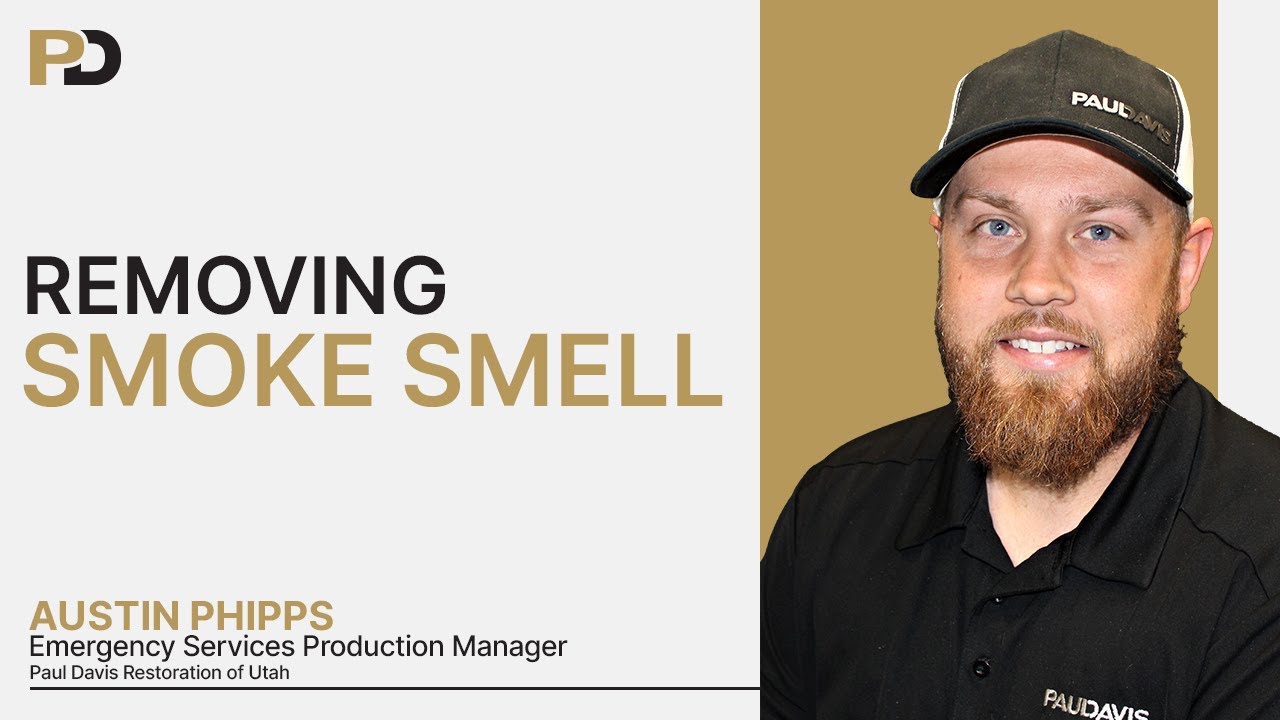
Remove smoke odor after a fire isn’t about masking smells—it’s about eliminating the odor at its source in building materials, contents, and the air. Even after flames are out, microscopic soot particles cling to framing, drywall, textiles, and hard surfaces. We interviewed industry professional Austin Phipps to learn how restoration teams actually get rid of the smell for good.
Q: How do professionals remove smoke smell from a house?
A: “We will go in and remove the porous materials out of the home, seal the framing, and run ozone machines or hydroxyls to remove the smoke odor.” — Austin Phipps
How pros remove smoke odor after a fire
1) Remove odor‑holding, porous materials
Porous items absorb and trap smoke particles. The first step is selective removal and/or specialized cleaning of materials that can’t be effectively deodorized in place.
Common removals: carpet and pad, insulation, heavily affected drywall or ceiling tiles, and other smoke‑saturated soft goods.
Why it matters: As long as contaminated porous materials remain, they continue to off‑gas and re‑odorize the space. Professionals determine what can be cleaned off‑site (e.g., certain textiles and contents) versus what must be discarded and replaced.
Related service: Fire Damage Restoration
2) Clean the structure to capture fine soot
After removal, technicians thoroughly clean remaining structural components—studs, joists, subfloors—often using HEPA vacuuming and targeted detergents designed to capture ultra‑fine soot without spreading it. Detailed cleaning includes ceilings, wall cavities, and floors to prepare surfaces for sealing.
Learn more: Smoke Damage Cleanup
3) Seal the framing to block residual odor
Once clean and dry, an odor‑blocking sealant is applied to framing and other structural surfaces. This encapsulates trace odor molecules that may remain embedded in wood or sheathing, preventing future off‑gassing. Proper sealing is a critical step to remove smoke odor after a fire for the long term.
4) Advanced deodorization with ozone
Ozone generators oxidize odor compounds in the air and on surfaces. Because ozone is reactive, spaces must be unoccupied during treatment and ventilated before re‑entry. In the right conditions and under trained supervision, ozone provides a powerful final pass on residual odor.
5) Advanced deodorization with hydroxyls
Hydroxyl generators create reactive radicals that break down odors and are generally suitable for use in more scenarios, including some occupied settings (based on the site plan and safety protocols). A professional will choose ozone, hydroxyls, or a combination depending on the loss severity, materials, and safety considerations.
Related service: Odor & Smoke Odor Removal
6) HVAC and duct considerations
Soot and odor can collect in HVAC components and ductwork. Pros evaluate, clean, and, when necessary, seal ducts to prevent re‑distribution of particulates. Until a professional advises otherwise, avoid running the system to keep contaminants from spreading.
7) Contents cleaning and controlled pack‑out
Many soft goods and non‑porous items can be restored through specialized off‑site processes. A controlled pack‑out protects belongings, enables precision cleaning, and keeps the work area efficient. Items that cannot be returned to pre‑loss condition are documented for replacement.
Related service: Content Cleaning & Pack‑Out
Why masking doesn’t work
Air fresheners and surface sprays only cover odors temporarily. Smoke odor comes from microscopic particles that penetrate materials; effective removal targets both the source (contaminated materials) and the pathways (air and surfaces), then seals what remains to prevent off‑gassing.
What homeowners should—and shouldn’t—do
Do:
-
If it’s safe to be inside, limit traffic to avoid tracking soot.
-
Wait for guidance before running the HVAC (which can circulate odor and soot).
-
Document the affected areas and any items you remove from the space.
Don’t:
-
Attempt ozone treatments yourself. These must be performed under controlled conditions by trained professionals.
-
Rely on scented products to “hide” the smell; they won’t remove smoke odor after a fire.
-
Dry‑wipe soot (it can smear and drive residues deeper). Use professional direction.
When to call a professional
If you still smell smoke after basic cleaning—or if the fire affected multiple rooms or structural materials—it’s time for a professional assessment. A certified team can determine what to remove, what to clean, when to seal, and whether ozone or hydroxyl treatment (or both) is most appropriate to remove smoke odor after a fire safely and thoroughly.
Need help now? Your local Paul Davis team can inspect, create a tailored plan, and restore your home safely and thoroughly